

Running a session that works for every player
11 things, in the order of a session. Each one says what to do and why it works, so you can judge which apply to your group rather than following a script. Most of them make the session better for every player, which is the main argument for doing them at all.
What this is, exactly. A free written guide. It is not a course, there is nothing to assess, and it does not carry a certificate or a qualification. If your club wants someone to come and talk to your coaches about the children you actually have, ask us and we will.
Before the session
One person the family can talk to
Name one adult at the club as the person the family speaks to, and tell the family who it is. Not a committee, not whoever is on the gate.
Why it works. Clubs that have made this work credit this single change more than any other. A parent who has had to explain their child to a new stranger every week will stop coming.
Ask what helps, not what is wrong
Ask the family one question: what makes a session go well for your child, and what makes it go badly? Write the answer down and share it with whoever is coaching.
Why it works. The family has run this experiment hundreds of times. You do not need a diagnosis to use what they already know.
Starting
Say the plan, then write it up
Tell the group what the session will contain, in order, and put it on a whiteboard where it stays visible. If it changes, change the board.
Why it works. A child who cannot hold a sequence in their head can read one. It also means a change is something they can see coming rather than something that happens to them.
Same start, every week
Open the session the same way each time, even when the rest of it differs.
Why it works. The beginning is the hardest part to arrive into. Making it predictable spends the child's effort on cricket instead of on working out what is happening.
Batting
The order goes on the board, and you go back to it
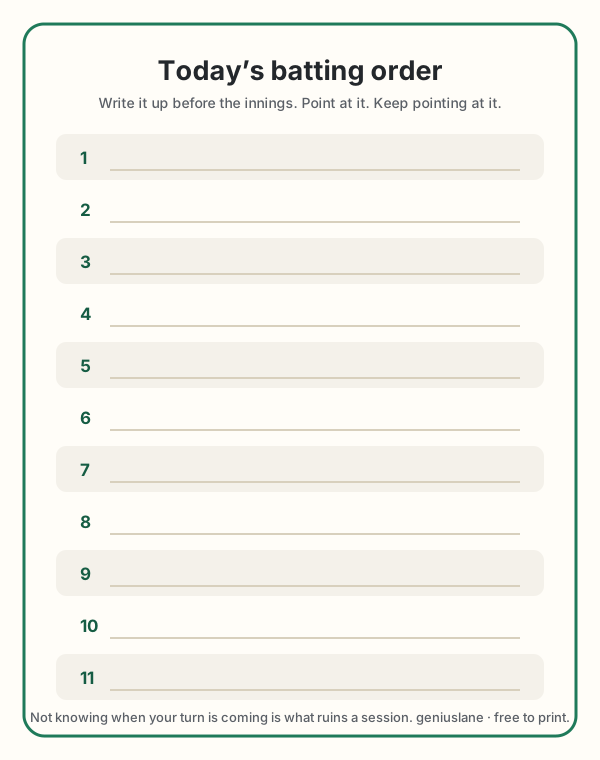
Write the batting order up, point at it when you announce it, and refer back to it through the innings so a player can check where they are without asking.
Why it works. Not knowing when your turn is coming is the single most common thing that ruins a session. Having to ask repeatedly is its own cost.
Give the wait a shape
Tell a waiting player what to do while they wait — scoring, counting, watching one specific thing about the bowler.
Why it works. Unstructured waiting next to other children is harder than batting. A job turns it into a task instead of a social ordeal.
Fielding
Show the position, do not only name it
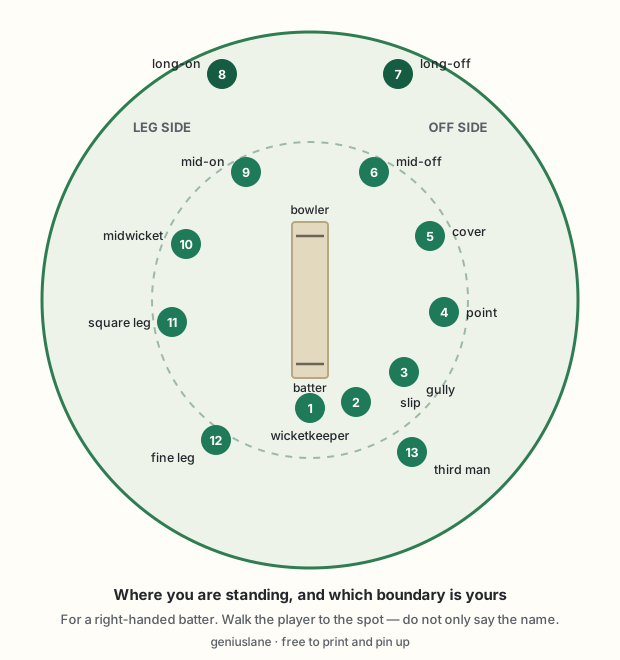
Walk a player to where they are standing. Show them which boundary is theirs and where they run. A simple field map on paper beats the word 'midwicket'.
Why it works. A position name is only meaningful if you already hold the map in your head. Showing it removes a step that has nothing to do with ability.
Move them less
Keep a player in the same position for longer than you otherwise would.
Why it works. Every move is a new set of instructions to process, mid-game, with everyone watching.
When it goes wrong
Walking away is allowed, and is not a discipline matter
Agree in advance that a player may step out for a few minutes and come back. Tell them where to go. Tell the other players it is allowed.
Why it works. A child who can leave before they are overwhelmed will usually come back. A child made to stay will often not come back the following week.
Say the unwritten things out loud
The things nobody is taught — walking off when you are out, clapping a teammate's fifty, where kit goes, what the warm-up is for. Say them, and do not assume they were absorbed.
Why it works. Most of what a club expects is never stated. A child who misses it is not being rude; they were never told.
Ending
Finish the same way too
Close the session with the same routine each week, and say what is happening next week before everyone leaves.
Why it works. The end is where the week's anxiety usually lands. Answering next week's question now removes seven days of it.
If a player needs more than a club can give
A club is not the right place to work out what is going on with a child, and should not be put in that position. If a family wants an assessment, we see children across India and the UK and online.