

The bit between assessments, finally built
426 games that find the level your child is actually working at, teach there, and quietly tell their clinician what they found. Included with every geniuslane programme.
Nothing out there did all three things at once
A parent whose child is behind ends up holding three separate problems. An assessment tells you where your child is, in a report, once — and then stops. An app will happily teach your child something, but it has no idea what they can already do, so it starts where a birthday says it should. And a school test will tell you your child is behind without telling anyone what to do on Monday morning.
Meanwhile the parent, who has the most hours with the child and cares the most, is handed a worksheet and left outside the process.
BrainSprout was built to close that circle: to work out where a child genuinely is, to teach from exactly there in a form they will actually play, to let a parent sit beside them and see what is happening, and to send what it learns back to the clinician who is responsible for the plan.
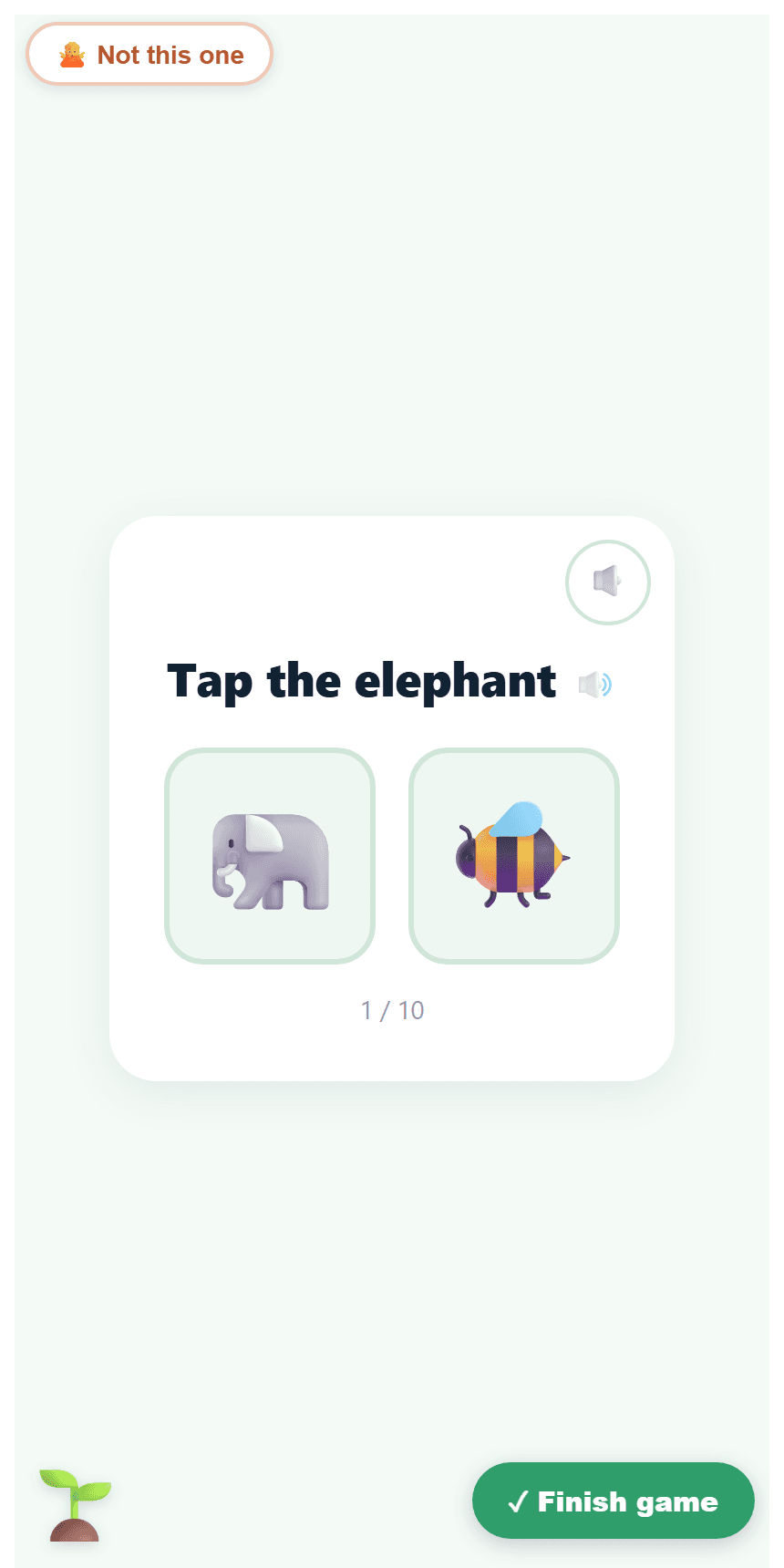
Not mock-ups — these are the real screens
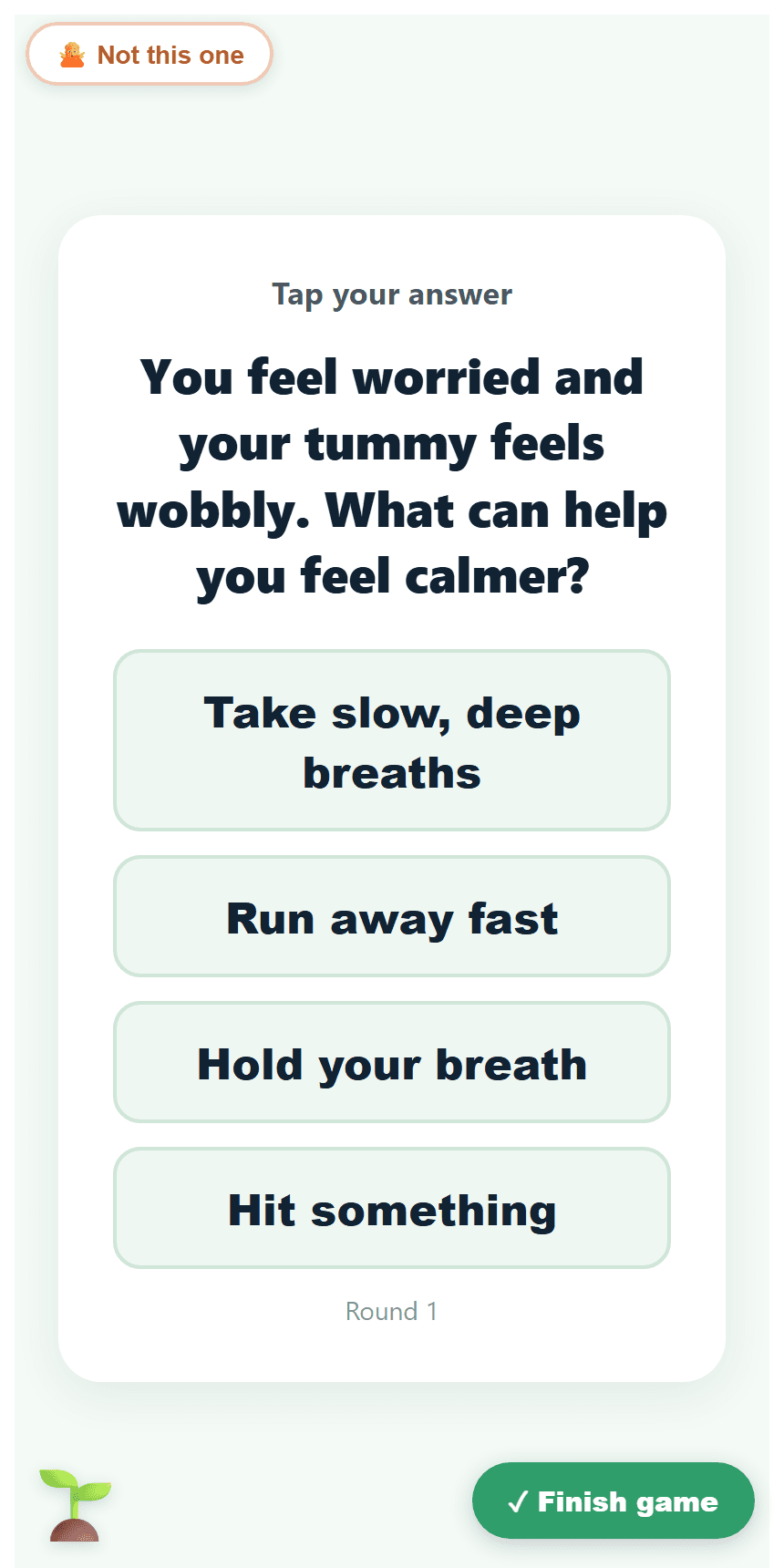
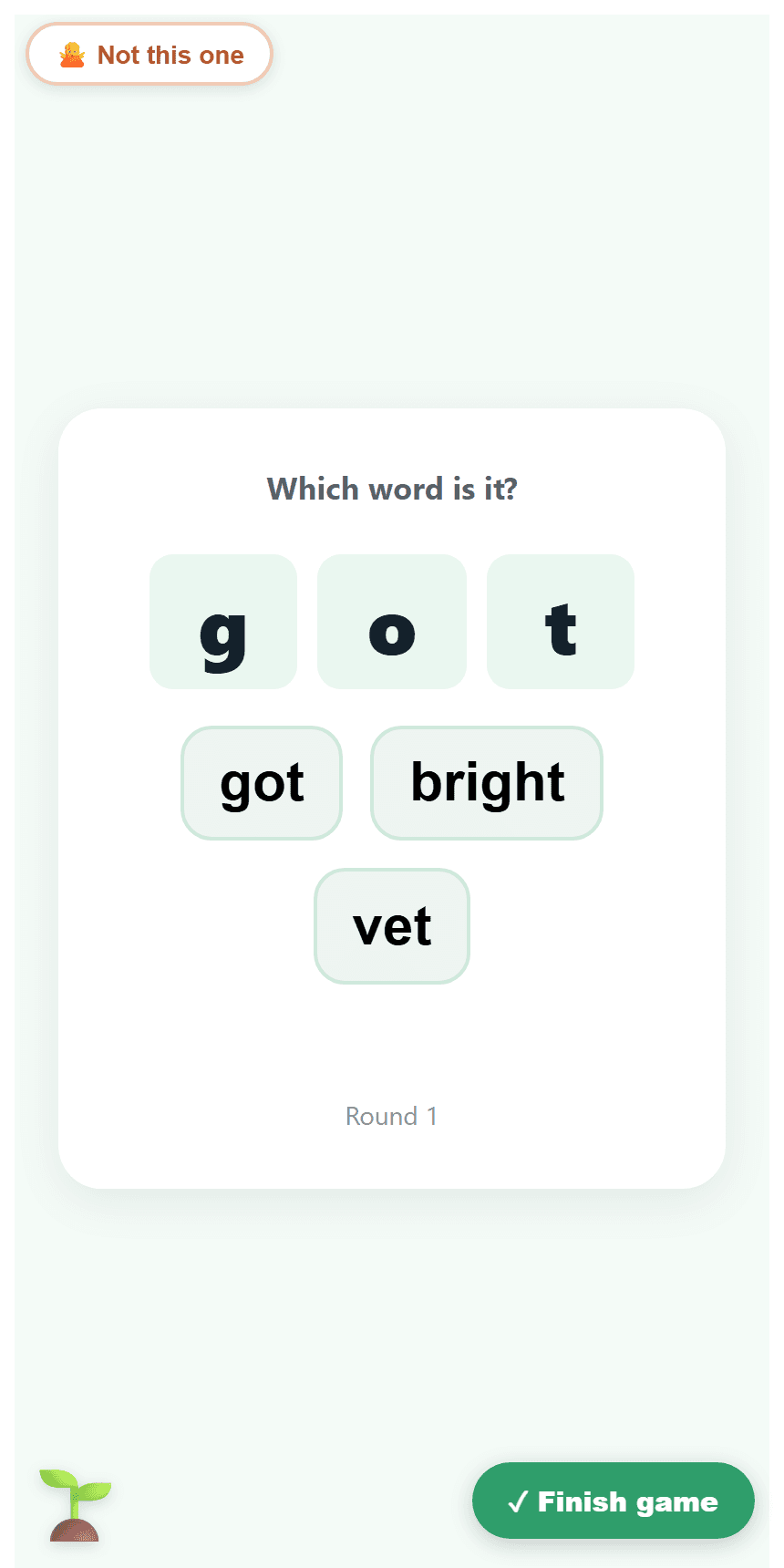
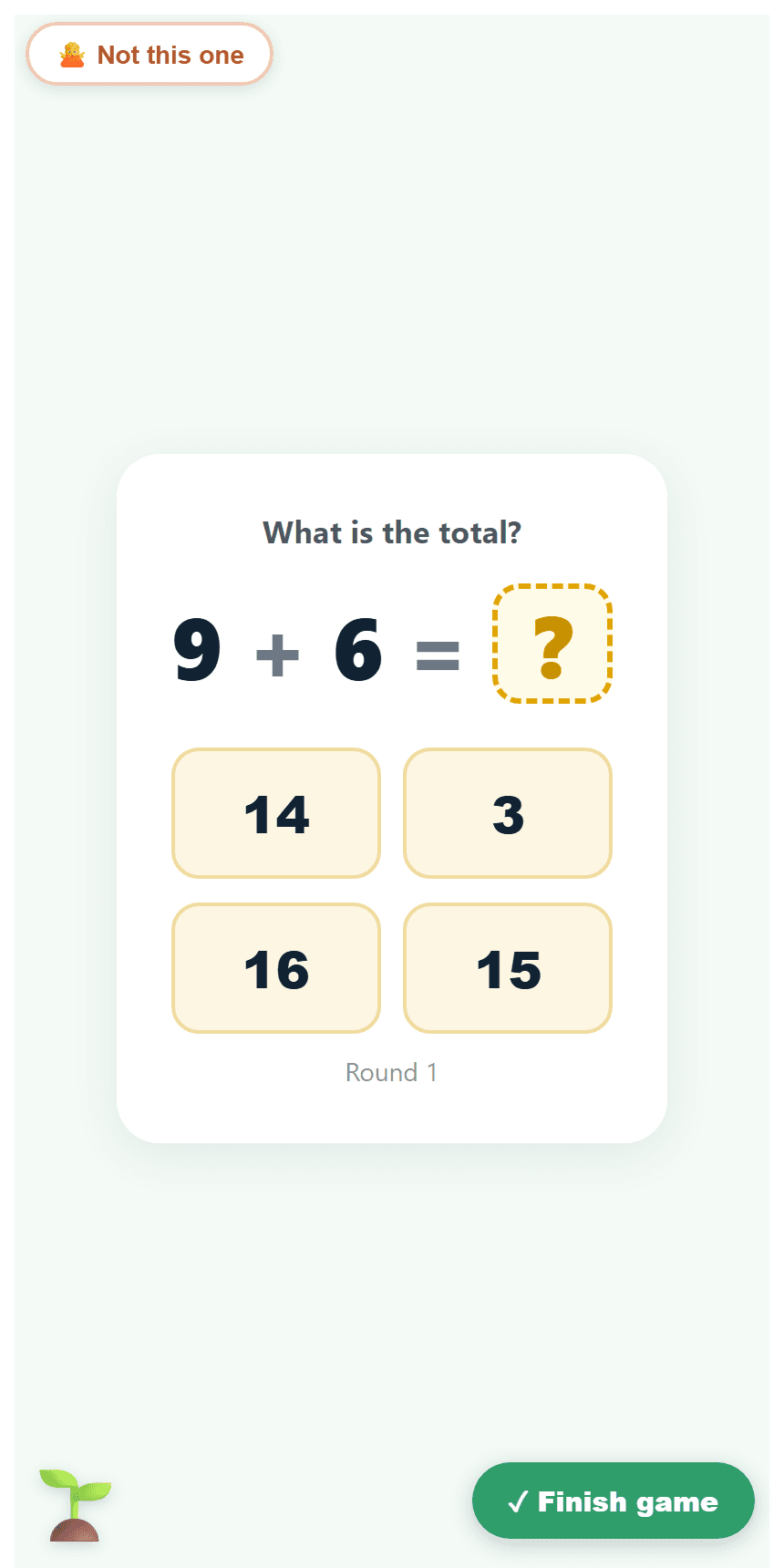
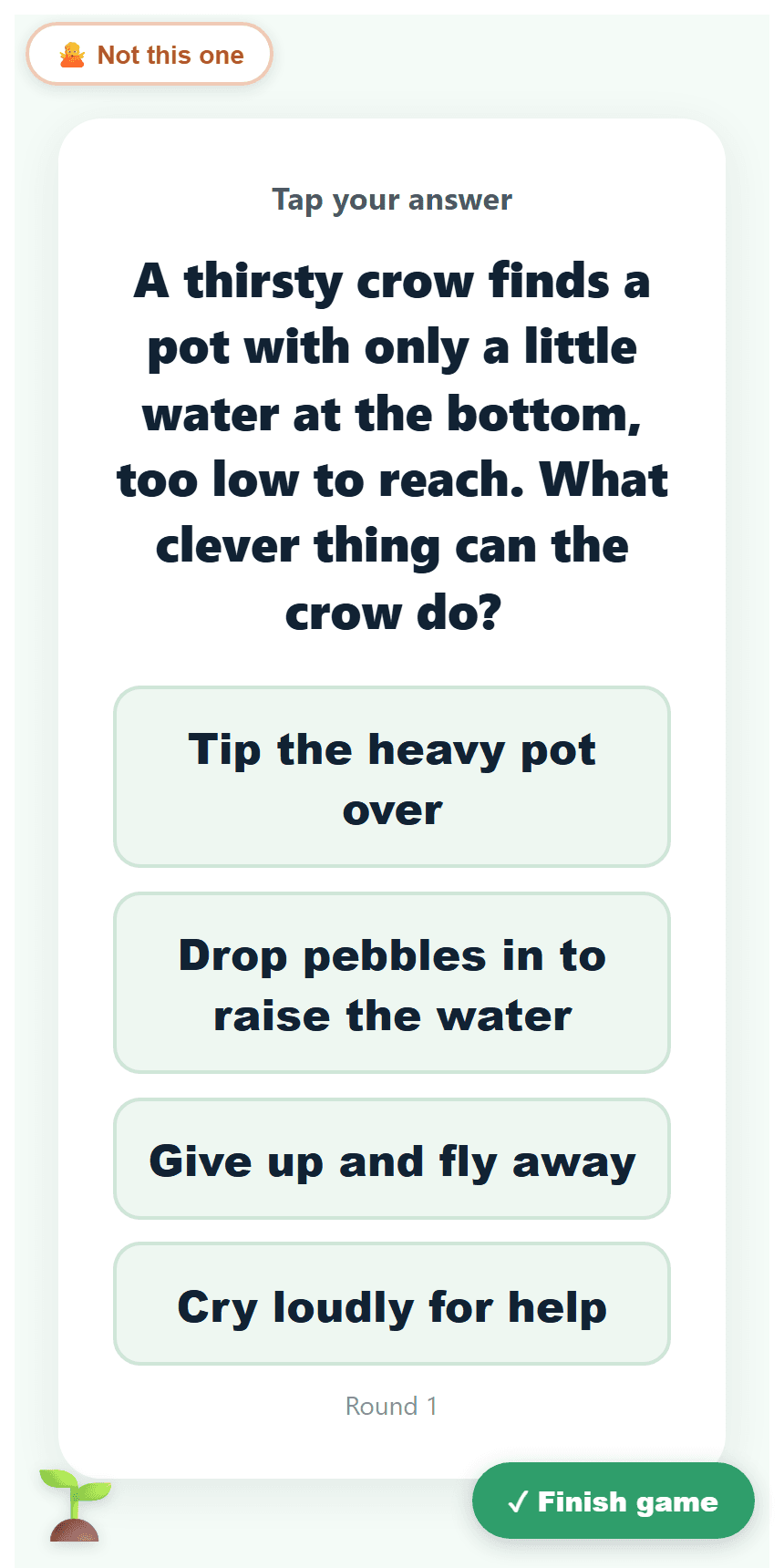
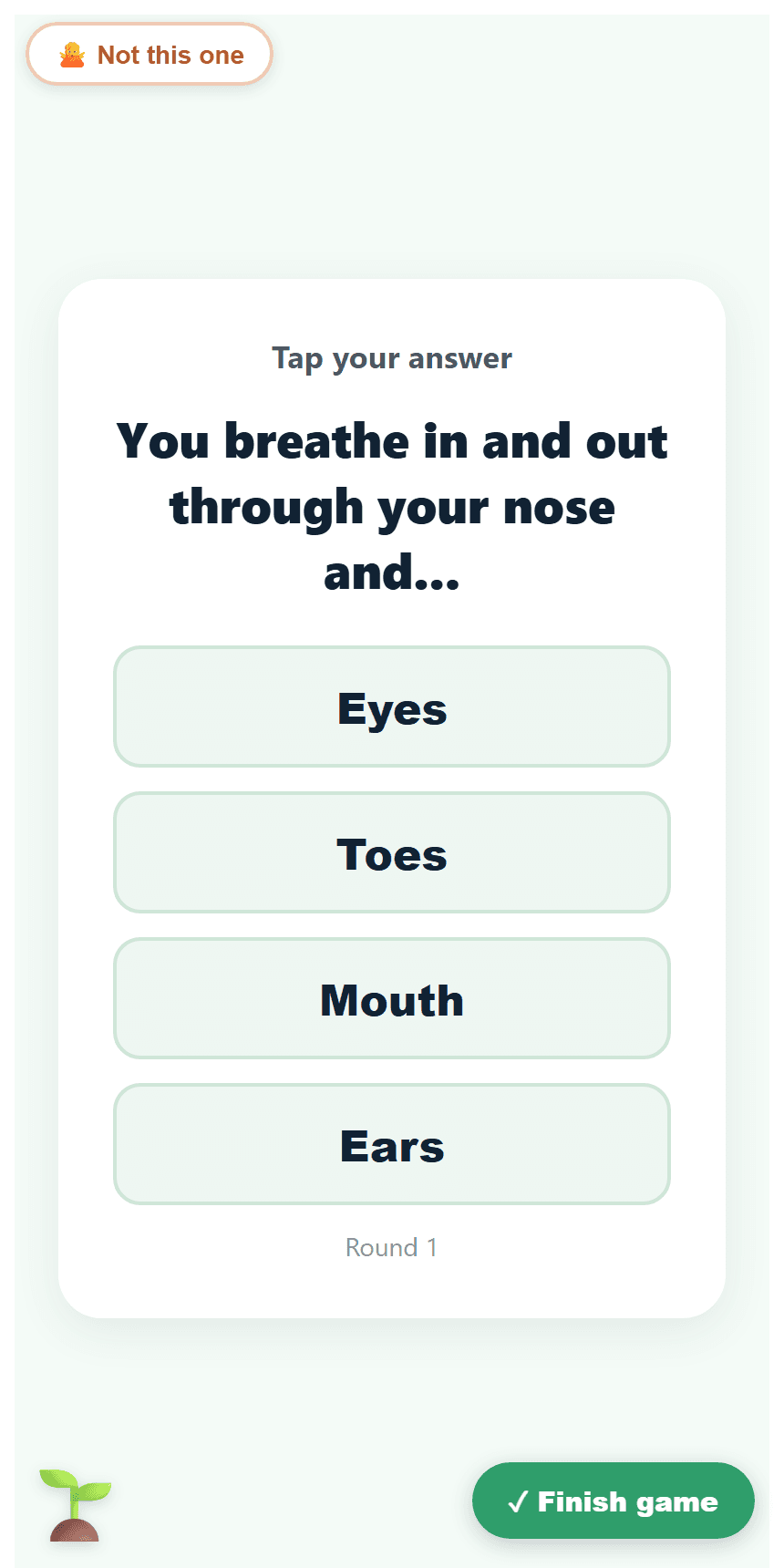
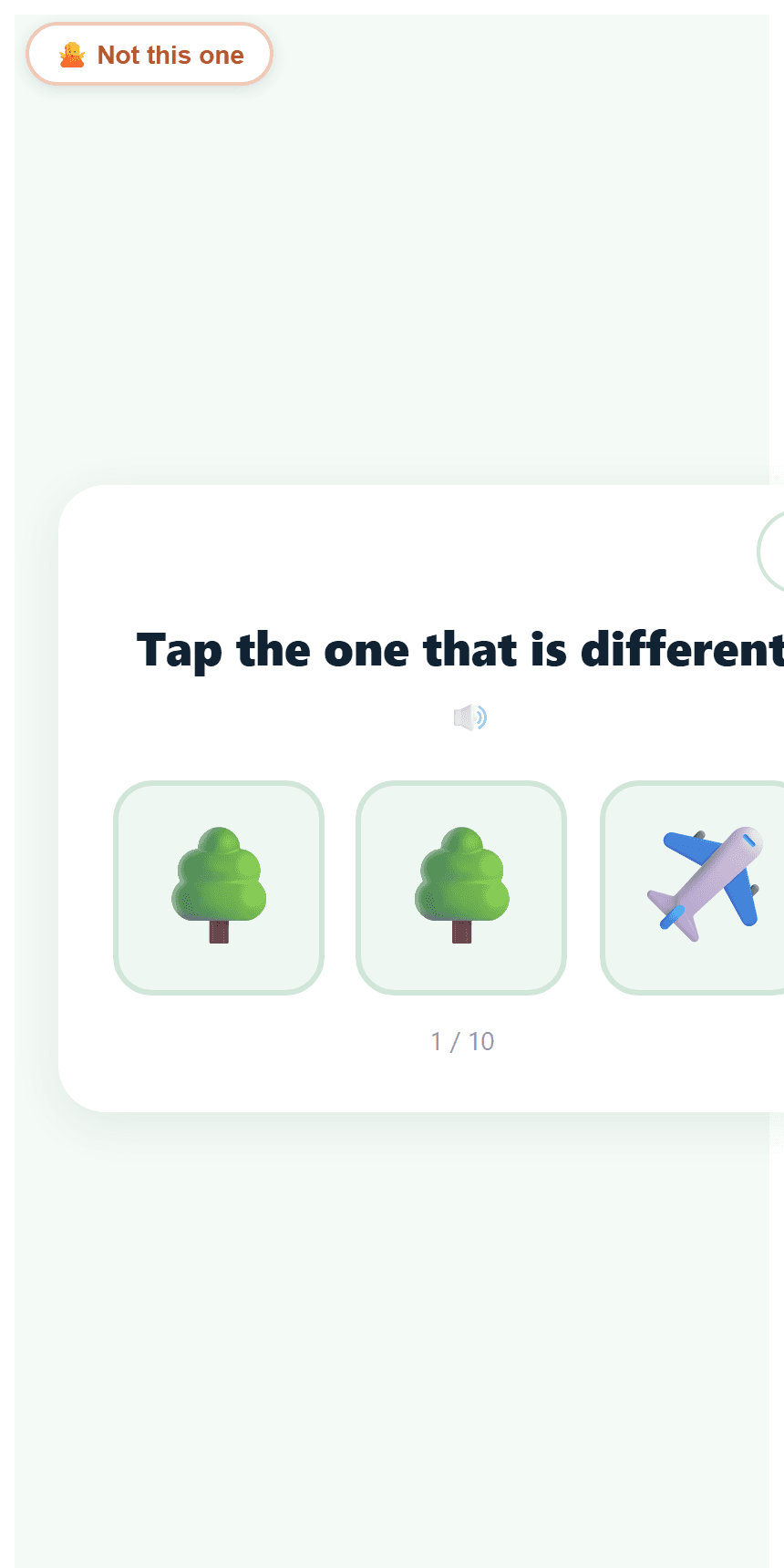
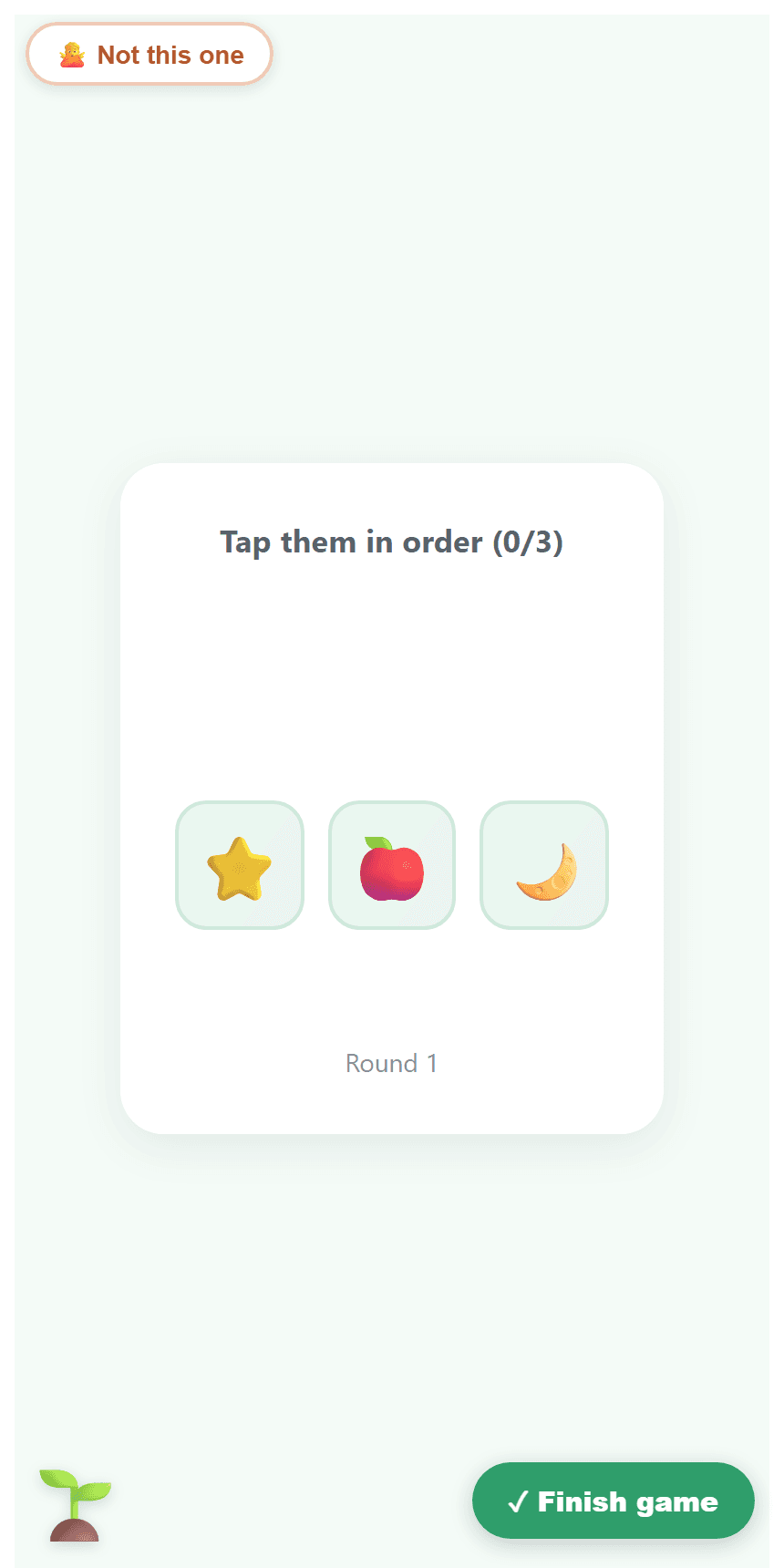
169 children have played it. Nine in ten came back.
We do not ask a child to rate a game, and we are not going to start — a child who is finding something hard should not also be asked to score it. So the only honest measure of whether children like BrainSprout is whether they choose to come back to it, and 154 of the 169 who have played did.
Between them they have taken more than forty-two thousand turns, across every one of the eight domains.
143 children now have a measured level
Not a guess from their age — 1,358 individual skill levels, established from how they actually played.
2,273 of those levels have gone to a clinician
Proposed onto the child's BEST profile for 140 children, where a clinician accepts, adjusts or rejects each one. The game proposes; the doctor decides.
When Sprout helps, children get it right more often
Turns where a child took a hint were answered correctly 81% of the time, against 77% unaided. Help is offered in about one turn in seven, and it works.
Figures from our own systems, 23 September 2026.
For a neurodiverse child, or a child with delay, the ordinary options fail in the same way
Almost everything a family is offered assumes a child who is roughly where the packaging says they should be. A reading app for seven-year-olds assumes a seven-year-old's reading. A worksheet assumes the child can hold a pencil and sit still. When the child cannot, the material tells them so — and a child who is told so often enough stops trying.
BrainSprout never tells a child that. It has no score to show them, no rank, and no target they have failed to hit. It simply moves to where they are and stays there, in a screen that suits their age rather than their level — so a twelve-year-old working on three-letter words is never handed a toddler's cartoon.
And because every turn is recorded, the quiet evidence of what a child can actually do accumulates: not an impression formed in a forty-minute appointment, but hundreds of turns taken at home, in their own time, on their own sofa.
It works the level out from play, the way an assessment would
There is no quiz at the start and no score at the end. The engine reads what a child does, trial by trial, and does the arithmetic.
The level they reliably pass, and the one they reliably fail
Classic basal–ceiling logic: bracket the boundary between the two and estimate where the real level sits. The confidence it reports describes how cleanly that boundary was established — never how severe anything is.
Whether a skill is learned or only remembered
A skill counts as mastered only when the evidence is reliable, at level, achieved without hints, and transfers to items the child has never seen before. Decode, don't memorise.
Speed, but only honest speed
Where pace matters it is scored as correct answers per minute multiplied by accuracy, and answers too fast to be real are discarded. Tapping quickly and wrongly cannot flatter a child's profile.
A picture that goes to the clinician, not to the child
Strengths and difficulties across eight domains build up week by week and appear in your child's record as supporting evidence. A clinician reads it and their judgement stands; a game never overrules a doctor.
Every game, by what it works on
Each game is registered against one skill strand, and that is how the engine decides what to play next. These are the live counts.
Numeracy & Mathematics
From counting objects to algebra, in the order the subject is actually built — the largest part of the catalogue, because a gap in maths compounds fastest.
Early Years
For children who cannot yet read a word on screen. A big picture, two to four things to tap, warm feedback, done. Naming builds the words a child understands; visual-spatial builds matching, difference, size, quantity, colour, pattern and direction.
Social, Communication & Daily Living
The part of childhood no worksheet covers. Thirty-two daily-living situations rehearsed before they have to be lived — the dentist, an injection, a haircut, a loud room, a change of plan — ten Panchatantra fables, and twelve social strands.
Writing & Composition
Spelling, grammar and sentence-building treated as a subject in their own right, not as an afterthought to reading.
Science & Discovery
The body, the earth and sky, forces and materials — answered in a form a child can play with.
Reading & Language
An eight-module pathway from print concepts to academic reading. A child moves on by mastering the step, never by turning a year older.
Thinking, Memory & Speed
The cognitive core: reasoning by pattern and analogy, holding and manipulating information, and working accurately at pace. The newest part of the catalogue, and the one being built out next.
Shaped around the children we see, not a school year group
Global developmental delay and intellectual disability
Early Years asks for no reading at all, and the pathway will sit at a very early level for as long as it needs to. Crucially, the difficulty and the look of the screen are separate settings — so a twelve-year-old working on three-letter words gets a twelve-year-old's screen, never a toddler's.
Autism and neurodiversity
The daily-living and social strands rehearse what actually goes wrong: waiting, a change of plan, a busy room, being asked to stop, a stranger with an instrument. Alongside reading, writing, maths and science at whatever level the child is genuinely at.
Dyslexia and reading difficulty
Phonological awareness, letter knowledge, decoding, blends, digraphs, syllables and affixes are separate strands, so the pathway can find the precise point where reading broke down rather than starting the whole book again.
After a brain injury, and where attention or memory is the difficulty
Visual-spatial work, working memory and honestly-scored processing speed are measured domains. That means change across months becomes something you can see in a record rather than something a family has to sense.
You are meant to be sitting next to them
BrainSprout is not a babysitter. The games are short by design so that a parent can play one alongside a child, in the ten minutes that exist rather than the hour that does not.
Inside the game a character called Sprout keeps your child company — cheering a right answer, encouraging after a miss, nudging when they go quiet — speaking in English, Hindi or Arabic. It is recorded encouragement, not artificial intelligence, and it works with no signal at all.
The artificial intelligence sits where it belongs: in your own app. The MyGeniusLane assistant will answer a question about your child at two in the morning, drawing on their own plan and, once a clinician has released it, their own profile. It is labelled as AI wherever it appears. It does not diagnose, does not read results and does not make clinical decisions — a clinician stands behind anything that matters, and a person replies during centre hours.
A child's programme only works if the adult beside them knows what to do
Games alone change very little. What changes a week is a parent who knows what they are working on, why it matters, and what to do when it goes wrong at seven in the evening.
So BrainSprout is one half of something. The other half sits in your own app: your child's plan written in plain language rather than clinical shorthand, their reports written for families rather than for other doctors, a secure line to the team who know them, and an assistant you can ask a question at two in the morning — clearly labelled as AI, and never a substitute for the clinician who stands behind the plan.
Your key worker switches BrainSprout on and sets the starting level. What your child then does at home comes back to that same team, and shapes what they ask you to work on next. That loop — a child playing at their real level, a parent who understands the plan, and a clinician seeing both — is the thing that has been missing.
The refusals matter as much as the features
- It never shows a child a score. No stars against a target, no rank, no comparison with another child.
- It never overrules a clinician. What happens in play is supporting evidence. A clinician reviews it, and their judgement stands.
- It never rewards reckless speed. Accuracy anchors every timed measure, so guessing fast gains nothing.
- It never gates on age. A child moves on when they have mastered the step, not when a birthday says they should.
How a family gets it
BrainSprout is included with every geniuslane programme at no extra cost, in English and Hindi, with Arabic in the Early Years activities. It plays offline once loaded, which matters on a train or in a waiting room.
If your child is already with us, ask your key worker to switch it on and set the starting level. If you are still deciding whether to come to us, this is part of what you would be joining.
Game counts taken from the live register, September 2026. BrainSprout supports a child’s programme; it is not a diagnosis and does not replace assessment or advice from your clinician.